Should I buy Facebook stock?

Facebook has been on the front pages more than once recently, but how does this affect stock prices? The company has shown it is robust, powering through the pandemic and a high-profile boycott this year. Its Q3 earnings suggest nothing can stop its path, however, with the antitrust lawsuits filed by the US government, will we see a turn around?
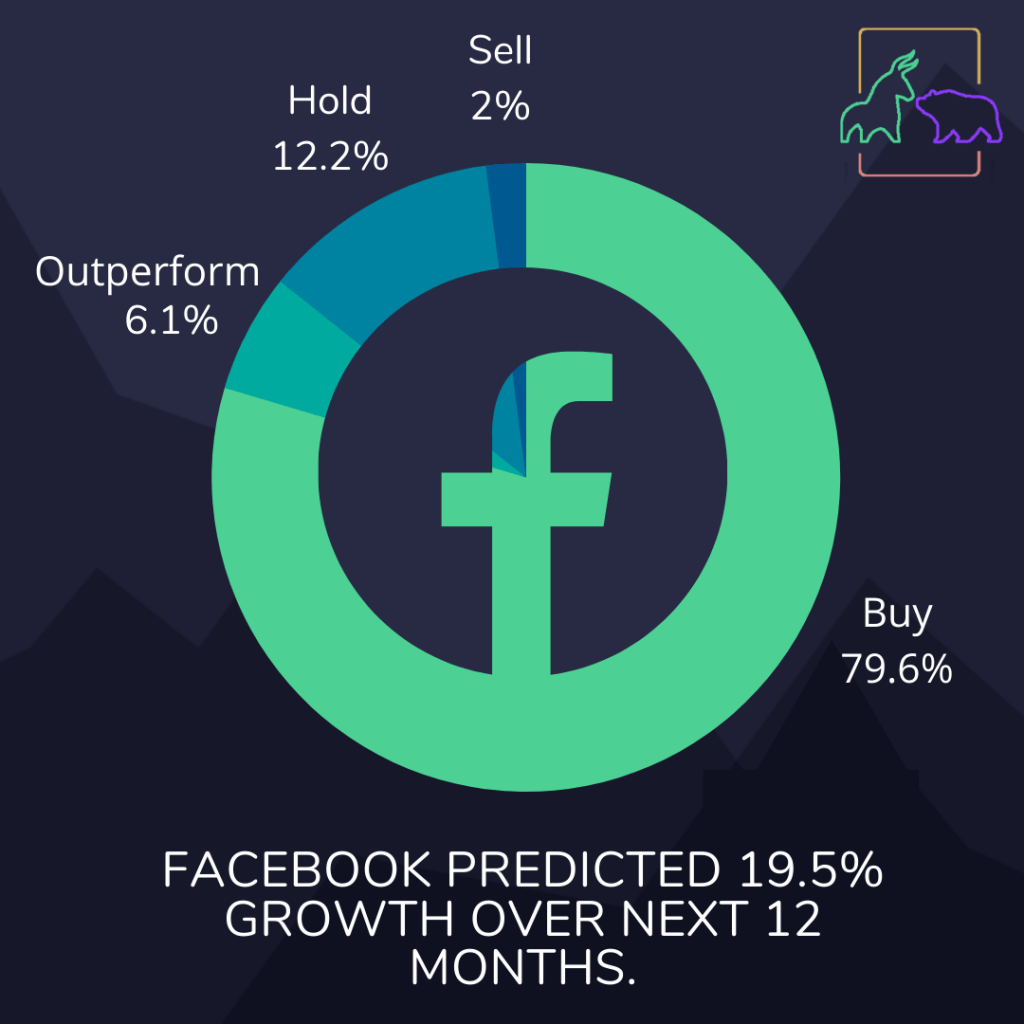
Facebook stock price prediction. Strong buy and growth.

The story of Facebook is well-known: Mark Zuckerberg, a Harvard student started Facebook in his doom room back in 2004. Since, the platform has exploded: in 2012 when the company went public shares were worth a massive $38 making Facebook worth an eye-watering $104 billion.

Recent News

Last week the Federal Trade Commission and 48 state lawyers filed separate antitrust cases alleging Facebook’s acquisition of Instagram and WhatsApp were anti-competitive, intended to stronghold Facebook’s monopoly position in social media. Yet this news didn’t affect the Facebook stock price which closed higher than opening, after riding a 2% dip.  

The FTC demands: “divestiture of assets, divestiture or reconstruction of businesses (including, but not limited to, Instagram and/or WhatsApp), and such other relief sufficient to restore the competition that would exist absent the conduct alleged in the Complaint,” Essentially the FTC want Facebook broken up to restore competition and to support the devolved companies in doing so. 

Another scandal that has hit the headlines was a high-profile ad boycott demonstrating tolerance of racially motivated hate speech. This was back in July and took a hit on growth in Q3. 

Buy or Sell

Although Facebook is perceived as standing strong despite the antitrust lawsuits, the statistics give us a different take. Facebook’s relative strength line (blue line) has diverged from stock price since August. Overall, this means that facebook stock only matches S&P 500’s performance since mid Summer.

Image from investors.com

Amongst fears of the impending lawsuit, Facebook has tried to explain their reduction in daily active users over Q3. They found a decline in daily active users in the US and Canada from 198 million to 196 million. The company says that the pandemic is to blame, but with further lockdowns worldwide and more time for social media, will this explanation really stand?

Despite all this, Wall Street analysts believe this FANG stock still has a long growth runway and has proved its stability through an economic downturn. With their strong record of stability and potential for growth Facebook stock is still a buy. But all this could change soon as the antitrust battle may break the company’s record of resilience.

Price Predictions

Despite everything, Facebook still has high potential for growth with the launch of Instagram Reels that rivals TikTok and the monetisation of Whatsapp. BC Capital Markets analyst Mahaney noted the 31%-44% increase in investment demonstrates Facebook is “investing aggressively in innovation from a position of strength.”

A staggering 98.8% of Facebook’s revenue this quarter was generated from advertising. Advertisers are crucial to the company’s success so with further damage to Facebook’s reputation will they go elsewhere? Well, unlikely, as there is not much elsewhere. Even so, advertising revenue growth remains at 20%, seeing there is potential to be unlocked. Facebook must now demonstrate it can still generate new users and keep old ones active as the reduction in North American users worried the company last quarter. Facebook’s reliance on advertising could make them vulnerable with the advertising market being severely impacted by the recession. This may be why the company withheld Q4 earnings guidance – but only time can tell.

Image from CNN Business

Over the next 12 months, Facebook will rise by 36.9% based on the past 8 years of stock price. Over the same period, Facebook stock is predicted to increase by 19.5% yet this isn’t a smooth increase (as seen in the graph below) so time your entry point right. 

Image from Financhill

Although Facebook’s well-established roots will get it far, constant knocks to its reputation question their stock outlook over the next 6 months. Overall, Facebook is a buy so invest now, but keep an eye on the bad press. To learn more about trading, check out BullBear

Want to invest in property? The pros and cons of stamp duty cuts.

Property sales to investors last month were the highest in the past 4 years. The stamp duty cuts earlier this year meant homebuyers don’t have to pay stamp duty on properties up to £500,000 until April 2021. Buyers could save up to £15,000 if they choose the right home. So should you invest in property?

Stamp duty thresholds were raised to support the property investors during the coronavirus pandemic after fear that the housing market may crash. Before July, homebuyers in England and Northern Ireland only had to pay stamp duty on properties over £125,000 (or £300,000 for first-time buyers). Rishi Sunak announced this would rise to £500,000 to provide nine out of 10 people to benefit from this break.

Stamp duty land tax is a lump-sum tax that property or land buyers must pay. The rate you pay depends on the property price and type with rates at:

  • Nothing on properties up to £125,000
  • 2% on the portion of a property £125,001 – £250,000
  • 5% on the portion £250,001 – £925,000
  • 10% on the portion £925,001 – £1,500,000
  • 12% on the portion costing more than £1,500,001

But with the stamp duty break:

  • Nothing on properties up to £500,000
  • 5% on the portion £500,001 – £925,000
  • 10% on the portion £925,001 – £1,500,000
  • 12% on the portion costing more than £1,500,001

On average, property buyers will save around whopping £4,500!

Who does this benefit?

First-home buyers already benefited from a raised stamp duty exemption so few will benefit from the scheme. Whereas people moving up or down the property ladder to just below the new exemption limits will see the greatest savings. Rightmove reported a 49% increase in people looking for properties within the £400,000 – £500,000 band.

Second homeowners can also reap the rewards of this stamp duty holiday. The 3% levy paid if you are buying an additional property worth more than £40,000 and up to £500,000 still applies. However, this extra charge can be discounted by the stamp duty holiday.  So for example if you buy a property for £400,000 as a second home, the £10,000 you would usually pay in stamp duty would be saved!

Photo by Khwanchai Phanthong on Pexels.com

Are there more buy-to-let investors now?

Being a landlord is looking more attractive with the stamp duty break making it even more economical to buy-to-let. In addition, more first-time buyers have considered buy-to-let properties while continuing to rent in more expensive areas. However, over the past few years tax changes have pushed some landlords out of the market due to higher tax, agency bills, maintenance, and regulation costs. The returns on buy-to-let investors is been lessening over the years, though, with the stamp duty holiday perhaps now is the time for old landlords to get back on the market.

How has it affected markets?

The stamp duty cuts could encourage greater competition for properties in the £125,000 – £500,000 band and push prices up. Furthermore, the falling house prices mean that waiting for the right time to buy would be more beneficial than taking advantage of the stamp duty holiday according to British estate agents.  

Photo by Gratisography on Pexels.com

Is it a good time to invest?

Investors made 15% more property purchases last month than in in the last 4 years. Don’t jump on the bandwagon unless you are serious about being a property investor, it’s not for everyone. While for experienced investors the opportunity of lower acquisition costs is worth it. For newbies, be cautious at every step.  Also keep an eye on your buying timeline, due to the length of time it takes for a property transaction to go through (around 14 weeks), people coming to the market now will likely struggle to get the sale through in time to benefit from stamp duty cuts that end at the end of March. Although with MPs lobbying to extend the holiday no one can say for sure.

Information is key to success and learning the pros and cons of investing in property now should stand you in a much better position to make an informed decision. Learn how best to invest with Bullbear.

Price Predictions: Apple

Apple Inc. (AAPL)  is a household name known for their innovative products but will they continue to perform well with iPhone sales steadily decreasing over the past three years?

Latest News

  • An Apple chip executive told employees that Apple has developed  the modem chip, which would replace Qualcomm components in their products. The executive didn’t disclose when the modem would be ready to use in Apple products, but it notes that a 2019 Apple-Qualcomm patent agreement has a six-year licensing pact.
  • Apple’s new $549 AirPod Max are backordered from 12 to 14 weeks despite being criticised for their high price.
  • In August Apple became the first US company to surpass $2 trillion in market capitalisation.
  • iPhone sales have been steadily decreasing for the past three years. However, the last quarter showed a remarkable 21 per cent decrease year-on-year. So why have sales fallen? Well iPhones just aren’t wowing us enough, with the most popular iPhone at the start of this year being the three-year-old iPhone 7. Last year latest model sales accounted for only 7.5% of all iPhone sales (down from 19% in 2017). However, Apple still has the highest active devices globally with 1.5 billion users at the start of 2020. 

Price Predictions

Short term predictions:

December: The forecast for beginning of December is 123. Averaged Apple stock price for month 119. Price at the end 116, change for December -5.7%.

January 2021: The forecast for beginning of January 116. Averaged Apple stock price for month 112. Price at the end 110, change for January -5.2%.

What the experts say for the next 12 months:

Morgan Stanley’s Huberty predicts Apple will have a record December quarter, giving a  PT of $136. Whereas, Goldman Sachs’ Hall stays with his controversial  PT of $75. This week Wedbush analyst Ives raised the Apple’s price target from $150  to $160 whilst retaining an Outperform rating on the shares. Overall, 39 analysts sharing their consensus rating for AAPL stock in 2021 agree that it is a buy.

Image from CNN Business

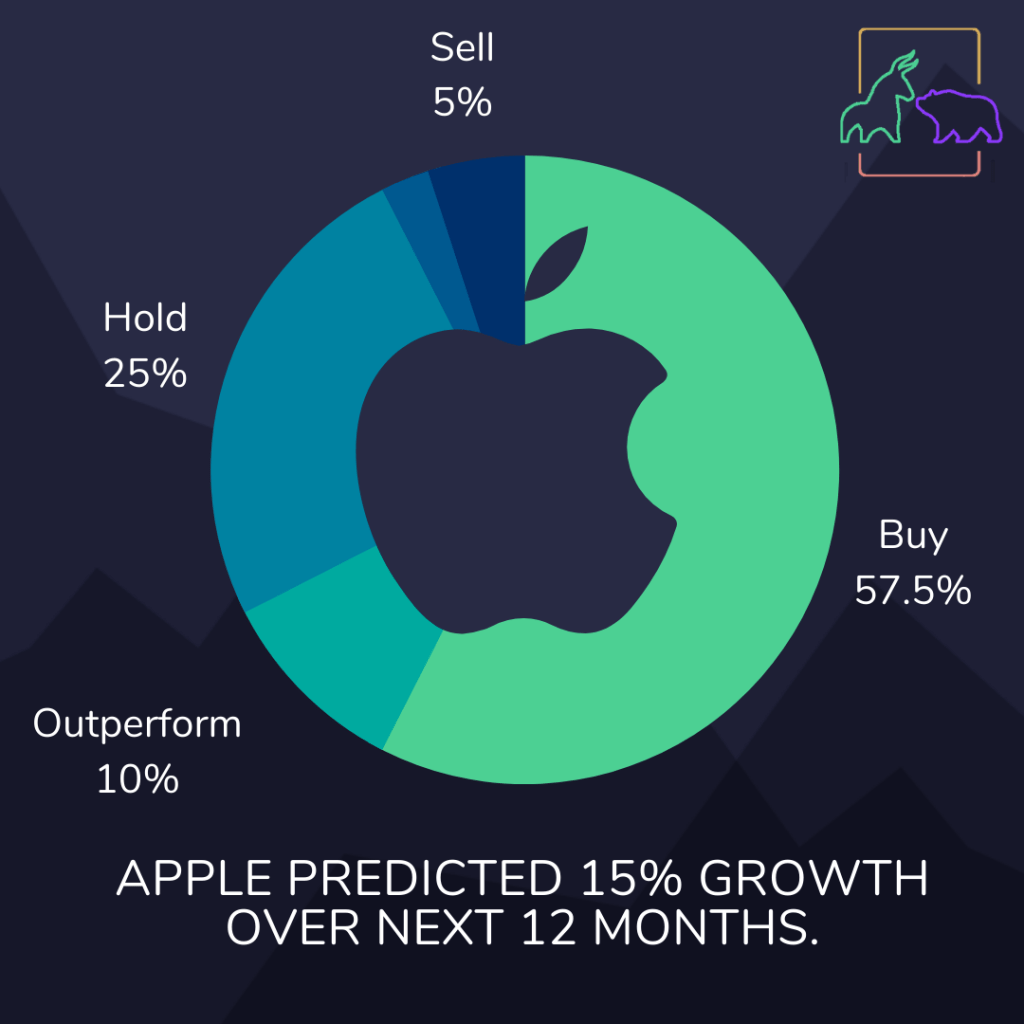
36 analysts, surveyed by CNN Money, predict the median price target for Apple stock at $133 over the next year, representing 15% growth from its previous closing price of $115.

The bottom line is even considering the risks, investors should maintain their positions as a positive long-term outlook is ahead. Keep up to date with the latest news with BullBear.

Social Trading | Why you should get involved

Social trading is a great way to trade markets by replicating positions and discussing trades with other traders. If you don’t want to invest time in analysing opportunities then social trading could provide you a quicker entry point into trading markets successfully. 

What is social trading?

Social trading, sometimes known as mirror trading, is a form of trading where you follow what a more experienced investor does. It entails copying the strategies of other traders who have put the time in to do fundamental and technical analysis and have built up knowledge and expertise over the years. It is a kind of social network where traders can interact with each other and learn about decision making from more experienced traders.

Photo by Pixabay on Pexels.com

Traders can share strategies and copy each other’s trades through social trading platforms or by following their recommendations on social media. Traders can subscribe to a trading channel who broadcasts a feed of their trades giving the opportunity to mirror their actions. More experienced traders offer their knowledge and expertise in exchange for money and/or status. Social trading is hugely popular with younger traders, allowing them to see what is recommended and what works. After all, you wouldn’t go to a restaurant with a bad review so why would you trade something that isn’t recommended. Social trading is a way to confirm what trades will be successful and how best to execute entry and exit points. You can trade any asset, with certain platforms and traders specialising in shares, commodities, fore and crypto. 

The risks of social trading

Photo by Skitterphoto on Pexels.com

Social trading is a fantastic way to include anyone and everyone in financial markets. However, you must be aware that with any trade there is risk. Trusting a third party who has more experience than yourself is great to guide you and allow you to learn about how markets move, but it is always up to the trader to make the decision whether to copy trades and take on financial risk. Following the moves of other traders means copying their trading strategy and not everyone has the same aims and risk appetite. Only trade what you are comfortable with as although it is easy to skip a few steps for the hope of profit, success isn’t guaranteed. Never trade more than you can afford to lose.

Don’t be tempted to bring in high leverage, as although it may boost gains it may also magnify losses. Traders who share their expertise and trades cannot guarantee success so decide your own risk and leverage when following other traders’ moves so you are aware of what you are entering into. Whilst mirroring experts will likely reap rewards, you need to ensure you are doing it on your terms. 

How to get started

There are several ways to go when it comes to social trading. You can simply look through social media (especially instagram) to find a plethora of traders willing to share their strategies. Social media is also a great way to interact with experts and dive into discussions with a community of people who genuinely want you to succeed.

There are also well founded social trading platforms set up by industry experts and brokers. eToro is a great example of a social trading platform from a regulated broker. eToro have low fees, and is super easy to open a new account with in almost any country in the world. eToro also have a low minimum deposit of only £150 meaning if you’re a beginner it can be really simple to get started! eToro verify popular investors to guide you to people you can really trust. You may be asking yourself what expert traders get out of the arrangement? For full clarity, eToro rewards popular traders depending on the number of copy trades that have been carried out. The top “elite” traders get 2% annually of the funds through this scheme plus the bonus of commission free trading.

Sign up to eToro now.

eToro is a multi-asset platform which offers CFD and non CFD products. 75% of retail investor accounts lose money when trading CFDs with this provider. You should consider whether you can afford to take the high risk of losing your money.

If you want to start trading and learn from expert investors then social trading might interest you. We always recommend beginner traders to learn the basics before they start investing, so if you are not ready, build your confidence with BullBear

Trading 101: How to make a trading plan.

With the right plan you will have the guidance you need to select assets and decide when to take profits and cut your losses. If you fail to plan, you plan to fail. Traders who have been successful over the years will swear by a trading plan so start building yours now.

What is a trading plan?

A trading plan is a decision making tool to help guide your trading activity. You should tailor your plan to suit you depending on your attitude towards risk and how much capital you have available. Things to outline in your personal trading plan:

  • Your motivation for trading
  • Your trading goals
  • Your attitude towards risk
  • Your available capital
  • Your time availability
  • Markets you want to trade
  • How to record trades

Do I really need a plan?

Photo by Pixabay on Pexels.com

A trading plan is a necessity to ensure you stick to certain parameters to optimise profit and keep emotions out of decision making. Although you will need to sit down for an hour or two to make your personal trading plan, you will save time each trade as you have already set up your terms. Creating a trading plan also requires you to focus on your past performance – analysing past trades can help you understand why certain trades were successful and others weren’t so you can go forward with the best strategy for you. Improving your judgement over time and seeing what your particular skills lend to is the best way to improve your success rate in trading.

How to make a trading plan

  1. Define your motivations

Working out why you trade and how much you can commit to the process will inform you on what markets and what style of trading suits you best. Take a few minutes to write down what you want to achieve from trading and how quickly you want to meet your goals. 

  1. Decide how much time you commit

Most people when they start off trading do it pretty casually. Perhaps you can trade while you do your full time job or maybe you would prefer to trade late at nights or on days off. Help this make a decision on which assets to choose as some will reap better rewards over a long period time (better for those with low time commitments) whereas others are more profitable if entering and exiting within the day. It is also important to note how long you wish to spend on educating yourself and practicing strategies. Being informed is the best way to be a successful trader so don’t be put off by the homework that will lead you to making profits. 

  1. Specify your goals

Use the SMART framework to define measurable and attainable success. Consider how much time you can commit and decide how ambitious you want to be whilst still making your goal achievable. It is also wise to consider what trading style suits you best, refer to our previous article to learn more. There are safer and more risky ways of trading out there which can help determine how achievable your goals are. We recommend using a percentage as part of your target as everyone starts in a different place. An example goal could be: ‘In the next six months I want to increase the value of my entire portfolio by 30%’.

  1. Decide your risk-reward ratio

Work out how much risk is acceptable to you before you even start trading. Trading on financial markets always carries a risk so you should never invest more than you are comfortable losing. If you’re a beginner you may want to be more careful with your money until you get more familiar with the markets. A typical risk reward ratio is 1:3, meaning you would ideally trade when potential profit is triple the potential loss. Consider implementing stop losses and take profits as this can help make you personal risk-reward achievable. 

  1. Determine your available capital

Be careful in considering how much to invest in your portfolio and remember to never risk more than you can afford to lose. If you need £1000 for rent, bills and other basics for each month make sure you have this in a separate pot to the money you hope to trade with. Investing in stocks and shares can reap higher rewards at a much faster rate than typical investments such as bank accounts, but be aware this comes with greater risk. If you only have £10 each month to add to your portfolio, accept it, you will be thanking yourself in the long run if your trading career doesn’t work out. 

  1. Be honest with how much you know

If you are inexperienced and don’t have much market knowledge then consider learning more. We offer courses and workshops from experienced traders to build your confidence and knowledge base so you can have a successful trading journey. If you know everything about crypto and nothing about other asset classes then consider giving yourself a minor education to get you up to speed before branching out.

  1. Start a trading diary

A trading diary is for you to record your trades so you can assess what techniques are working for you and what aren’t. Consider entering technical details to see whether you have achieved your risk reward ratio and record any factors that went into your decision to open and close a particular position. Perhaps you saw an article in the news or followed a wall street trader or even felt lucky that particular day – whatever you based your decision on, write it down. You might work out a series of losses are based on the same decision making factor. 

Having a trading plan is essential to achieving success. Not only will the process uncover your strengths and weaknesses but it will also help guide your future decisions. If you’re not ready to start investing, practice with BullBear

Will Brexit boost stocks?

With Brexit negotiations almost at a close, Britain will start the new year without the EU. All eyes are now on how the  UK’s economy will bounce back depending on deal or no deal. 

The EU referendum result back in 2016 was far from what we expected with drawn out negotiations finally coming to the end just 4 years later… Although the pandemic has made Brexit news by setting back the trade deal, investors should now think about the uncertainty of the pandemic and Brexit combined. 

A no-deal Brexit at the end of 2020 would hit the UK economy hard with a slow recovery of 4.2% GDP in 2021 as best case scenario. With economic issues in the short-term, no trade deal would impact trade, employment rates and productivity over the long-term. Whereas a good agreement between the UK and EU would hugely improve the economic outlook and get Britain out of this slump. 

FTSE

The UK stock market has fallen firmly behind other key markets around the world. The FTSE 100 Index has been on a rollercoaster tackling Brexit updates and the coronavirus pandemic. The index is largely made up of oil companies and considering the low prices this year due to worldwide lockdown, no wonder the FTSE 100 has had a bad year. There is also a distinct lack of tech companies in the index making it an unattractive investment compared to NASDAQ’s tech index. Furthermore, British companies have held back on dividends leading investors to different economies. 

Trade deal

Photo by Pixabay on Pexels.com

Investors are hoping for the recovery of the UK economy to set off 2021 with a bang. UBS estimates a 13% increase in international investors in UK markets leading from the EU trade deal. After a long stint of poor performance, UK stocks are turning around. 2021 forecasts a dividend yield of 3.9% and an estimated 32% growth in earnings per share under a bullish outllook. However potential COVID lockdowns and no-deal Brexit can see investors retreating with uncertainty.

Supposedly  95% of the UK EU deal has been secured with both sides content on key topics such as social security. However there is still disagreement in a few areas, including fishing, which has been a sensitive point of discussion for a long time. Brexit negotiations are sure to test your nerves with high turbulence reflected in the markets. However, this would be the worst time to sell as you solidify your losses and miss out on any potential recovery in the market. Although there are no guarantees that markets will improve.

Sterling

Sterling has been swinging ever since the Brexit referendum, depending on what exit deal looked most likely on the cards. A weaker pound is great for UKs multinational companies as profits are boosted when money changes to sterling. But bear in mind if the pound strengthens the reverse will happen! Under a no-deal the Bank of America forecasts a GBP/USD of 1.1000 and GBP/EUR of 1.0525. 

Brexit isn’t the only factor affecting stock prices. Large events like new lockdowns, the US presidential election or the announcement of Covid vaccines complicate the outlook. However, taking a global approach and diversifying your investment portfolio to minimise shocks to UK stock markets will provide the most security under the uncertainty of Brexit. Don’t be put off investing in UK stocks, although some may suffer, others may thrive.  Keep upto date with the latest news with BullBear.

Disclaimer: This article is written for entertainment purposes only. Seek professional advice if you are unsure about investing.

December Stock Forecasts

It’s the holiday season and there are some big moves in the stock markets set for December. Top performers include e-commerce supporters Salesforce and Crowdstrike and the alt social media platform Pinterest. Read on for more information.

Analysts predict strong earnings in the retail and software industries so keep an eye out! Software has performed great this year, although valuation concerns and the vaccine news has slowed their bullish move. We all know the retail sector has struggled throughout the pandemic, however, with the arrival of the holiday season and the end of the pandemic in sight they are set to move ahead. E-commerce corporations Salesforce.com and CrowdStrike Holdings, Inc. have performed better than expected. With strong year-on-year growth, these retail companies should push high over the coming month. 

Photo by Pixabay on Pexels.com

Salesforce are known for their cloud computing solutions and have gained a massive 52.2% this year compared to the benchmark S&P 500 indexes 13.88% rise. Two new variations of Salesforce have been released this year optimising businesses productivity and security –  both of which are a massive attraction for companies who have switched to online sales. Furthermore, Salesforce is set to buy Slack Technologies Inc. for $27.7 billion, this acquisition will threaten Microsoft Corp. as the biggest software corporation. However, the deal is not set in stone and is only set to close in July 2021. An overall year-on-year growth is expected at 16.3% for 2020 and upto 21.7% in 2021. With all this ahead of them, now is a good time to hop on the bandwagon and invest in Salesforce.

Crowdstrike provides cybersecurity services, another sector which has hugely benefited from the pandemic and switch to working-from-home. The company has gained an eye-watering 202.5% so far this year with a year-on-year growth at 84%. Crowstrike may be one of the safest investments this December with its incredible growth rates and market satisfaction. 

Photo by Brett Jordan on Pexels.com

Pinterest is on the best buy list for December as the holiday season sparks the company’s strongest period. Integrated e-commerce ads have proven incredibly successful as sellers opt for the safety of advertising online. And with this being the busiest shopping season yet and the Facebook boycott still in the back of our minds, the platform’s success offering users a unique web experience to focus on themselves rather than others is sure to skyrocket. Pinterest is predicting 60% growth over the fourth quarter despite people’s over reliance on their mobiles during the pandemic, areas that will see a strong bounce back such as weddings and travel will continue to push traffic through the platform over the winter period.

Oil is set to rally stocks over December under a perfect storm of COVID vaccine, a weakening US dollar and reduced US crude supplies. Stocks that will benefit include: Total S.A.(TOT), Enbridge (ENB), Halliburton (HAL) and Hess (HES).

With the news of the vaccine being approved in the UK this morning proving the end of the pandemic is in sight, there will be a change in the markets. Keep upto date with the latest stock market news by following BullBear.

Cyber Monday to boost economic recovery

As Cyber Monday rolls around, how can we expect to see the stock market react? As consumers take advantage of Black Friday and Cyber Monday deals, retailer stocks are looking up. A strong sales forecast over this weekend can boost retailer stocks.

Last week gave an indication of how the holiday weekend would perform. Dow Jones Industrial Average is up a record breaking 0.2%, S&P 500 futures have gained 0.3% and Nasdaq has risen 0.6% at the end of last week. Cyber Monday is typically the greatest single-day shopping event in the year with 2019 sales hitting $730 billion in the US. So let’s see how retailers perform.

Black Friday is often used by investors to see how retail stocks are performing with this year being especially important to identify those retailers that will bounce back from the pandemic caused recession. Investors look for consumers to spend lavishly over the weekend to see whether a return to high consumer spending will feed economic recovery. A strong performance over Black Friday and Cyber Monday would help confirm the start of a rebound.

E-commerce should particularly benefit from this year’s holiday shopping season. Covid has changed the way people shop, with more and more people choosing to shop from the comfort of their own home to avoid the deadly virus. The pandemic has pushed consumers to substitute in-person shopping habits to buying online with e-commerce performing well through the pandemic. Adobe Analytics predicts 2020’s Cyber Monday to be the best performing yet with a year-on-year growth at 15-35% with a report over the last few days indicating a 21.5% year-on-year growth. This would do wonders for the retail sector who have struggled with more conservative buying habits and covid restrictions putting many companies in the red. Today, Topshop owner Arcadia announced insolvency due to the effects of the pandemic. Will holiday shopping save some retailers?

Effect of Black Friday

Black Friday is a crucial yearly event for retailers where sales traditionally push them into the black for that year. Sales over Black Friday also provide key insights into the health of the retail industry and the rate of growth that can be expected in the current climate.

Black Friday also affects the stock market by having extra days off with higher trading activity seen the days preceding these seasonal events. This phenomenon is known as the holiday effect and is a great opportunity for traders to make a profit.

Vaccine Rallys

Whilst retailers steal the focus of stock market news it might be worth looking at other sectors that have benefited from the vaccine announcements. The energy sector, which was this year’s biggest loser, is up 33.8% this month as the end of the pandemic is in sight. Financials, industrials and materials has also seen a benefit, up 13% over November and small-caps such as the Russell 2000 rallying 20.6% this month, possibly proving its best month ever. 

Performance of retailers this holiday weekend will indicate how the economy will bounce back from the pandemic-induced recession. Keep up with the latest stock market news by following BullBear

The new face of trading

Who is trading online? A dramatic demographic shift has hit the world of trading. Let go of your stereotypes as we enlighten you to who is really trading these days.

The development of apps has opened up trading to a younger generation, especially for day trading. And there are more and more women trading each day. Surprisingly, young people and women appear to be drawn in by the greater access of cryptocurrency. But why is this all changing?

Not your stereotypical trader

Traders are getting younger! BrokerNotes found 65% of all online traders in the UK fall into the 18-34 year old age category and this figure is increasing year on year. Millennials make up 58% of all online traders. The shift towards a younger demographic is clear! No wonder brokers have stopped targeting over 45 year olds – they only make around 15% of all traders.

With women becoming better represented in industry their proportion has increased to 1 in 7 of all traders – this equates to 2.7 million female traders worldwide. Most of this increase is from an increased popularity in online trading by women in Asia.  Cryptocurrencies are the most popular category for women to trade making up around 60% of trades. 

Also, traders don’t seem to live in as much luxury as we think (the Lamborghinis are misleading) with most traders at a household income of less than £35k per year. Not only are traders living more modestly but a whopping 95% of traders don’t live in a financial city at all. This is just one indication that trading is becoming a lot more mainstream. 

What is driving change?

Source:  J.P.Morgan 

It is now much easier to start trading. Today, anyone can download an app and start trading by copying experienced traders on social media to make a profit. Social trading is an area which is gaining a lot of traction and perfectly suits younger traders. Communities of traders share information and interpret signals as a collective to help each other.

Cryptocurrency has gained a lot of media attention over the past few years with the introduction of new currencies such as Bitcoin and Ethereum peaking the interest of younger audiences. A huge 75% of 18-34 year old traders trade crypto!

The increased ease of access of smartphones has definitely driven this shift in trader demographics. While 15 years ago you could only access the most basic apps, now you can have your portfolio easy to access in your pocket. Gone are the days where you sit at a desktop computer to carry out your trades, now thanks to simple user interfaces and lightning network speeds you can perform transactions from wherever you want. And we all know how much the younger generation love anything convenient! New technology means digital natives can start trading with greater ease with mobile trading now making up 60% of all transactions. 

A shift towards younger and less experienced traders has rippling effects across the trading industry. The amount of demo accounts on broker platforms has widely increased giving younger traders a chance to get to grips with trading before they actually invest. Not only this, but there is now also a lot more awareness of the risks and better safeguarding to protect beginners. With more regulations the industry is getting more respect by the public, trading is no longer associated with scams but instead is now seen as a positive and dare I say sensible activity. 

The average trader is not quite what you think. There are now more younger, female and crypto traders than ever before. If you want to practice trading before you invest then download BullBear. 

*We thank BrokerNotes for the statistics used in this article from their 2018 survey.

Are blue skies ahead for airline stocks?

Following the huge rally last week sparked by vaccine announcements, is it a good time to buy airline stocks? Well this weekend saw the highest number of travellers for eight months and this will only improve. The sky’s the limit. 

Positive news about vaccines has injected money straight into industries worst hit by the pandemic. Traders dumped tech stocks and replaced them with airlines, cruise companies and hospitality stocks. The recovery from the Coronavirus pandemic is happening quick in the stock markets but it’ll be a while before we go back to pre-covid levels, with some experts saying winter 2023. 

The pandemic meant revenues were slashed, planes were set aside to gather dust and debts increased for airlines. Global air travel was down 94% in April due to travel bans – this is equivalent to air travel 30 years ago. But things are looking up with the roll-out of successful vaccines in sight. Passenger numbers will be up to 76% of 2019 numbers next year if all goes well. Airline companies have already hugely benefited from the vaccine announcements. The Dow Jones US Airlines Index has risen by 23% this month with equivalents across Europe up 45%. The transition to a post-pandemic world is really taking shape!

So which airlines will do the best?

Airlines in the US have a seeming advantage compared to other companies as intra-national travel in the coming few months will bounce back fast. Delta entered 2020 in  the strongest financial position buffering loss of sales over the pandemic. DAL has seen the smallest loss of the american airlines at only $10 per share this year. Delta will likely be one of the quickest to recover so watch their price into early spring. United Airlines however,  is one many of you will be wary of as it doesn’t have the security of larger US airlines like Delta. As UAL would be a risky investment, with some analysts predicting their 2020 losses to continue into 2021, hopefully reducing the loss to $4 per share, is it a wise investment? The higher the risk, the higher the reward isn’t always true, especially when it comes to stocks and shares. Coming out worst out of the biggest US airlines is American Airlines who had to heavily dilute shareholders to keep afloat. It’s not a surprise that AAL stock is going to stay flat considering their levels of debt. They have relied on government and bank support and will be saddled with this debt of many years to come.. 

In Europe the biggest names will survive. EasyJet had a great week with a 35% boost in share price seeing it gain back most of its 2020 losses! The budget airline Wizz Air is one to watch based on their strong finances and region of travel. Brokers forecast 80% of pre-pandemic revenues for the airline by 2022 which is much higher than the industry is predicted overall. While Lufthansa has said to lose 800 million euro per month over 2020, their strong balance sheet and high liquidity funds will stand them in good stead for recovery over 2021. 

Though travel bans will likely still be in place until the vaccine has reached everyone (and at this point it is complete speculation that this will happen before your summer holidays). EasyJet have said they are going to fly just 20% of capacity for the first quarter of 2021 despite bookings increasing by 50% over the past week. 

It will take years for airlines to fully recover from the pandemic but it looks like most big airlines will survive. To keep up with the latest news follow BullBear